
Shop Security Starter Kit: Repeatable Sales Model for Installers
Across Turkey, Greece, Romania, and the wider European market, an estimated 2.3 million small retail businesses operate with either outdated wired alarm systems or no security at all[^1]. They are too small for enterprise security providers and too demanding for DIY consumer brands. For the installer who recognizes this gap, the opportunity is not in selling individual products — it is in building a repeatable business model. This article introduces the shop security starter kit — a standardized installer sales model that turns one-off installations into a scalable revenue stream.
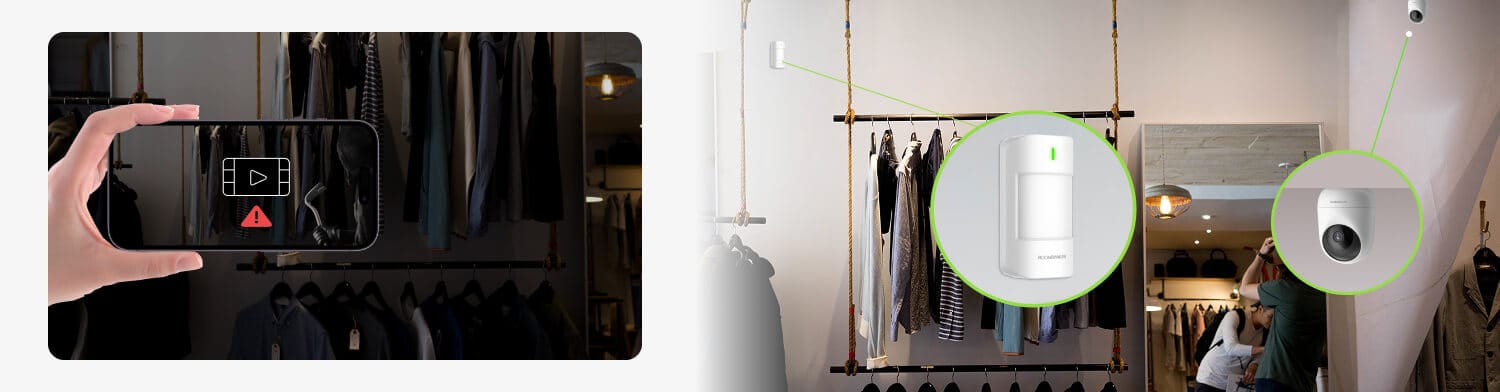
The 2.3 Million Gap in European Retail Security
The small retail segment — convenience stores, bakeries, mobile phone shops, independent pharmacies, kebab houses — shares a common set of security needs. They need intrusion detection during off-hours, a panic capability during operating hours, and a visible deterrent that discourages casual theft. What they do not need is a custom-engineered solution with a month-long design phase and a EUR 2,000 price tag.
Enterprise security companies cannot profitably serve a shop willing to spend EUR 400–600 on protection. Their sales model depends on larger contracts with recurring monitoring revenue spread across dozens of zones in commercial buildings. At the other end of the market, consumer-grade platforms lack the professional monitoring compliance (EN 50131 Grade 2) that insurers and local regulations require across most of Europe. The gap in the middle is wide — and it belongs to the local installer.
Why the Standardized Shop Security Kit Changes the Economics
The traditional security sales process for an installer looks like this: visit the site, measure, draft a custom quote, wait for approval, order parts, install, commission. For a small shop, this cycle can take three weeks and generate a EUR 400 job. The maths does not work when half the margin evaporates in site visits and waiting time.
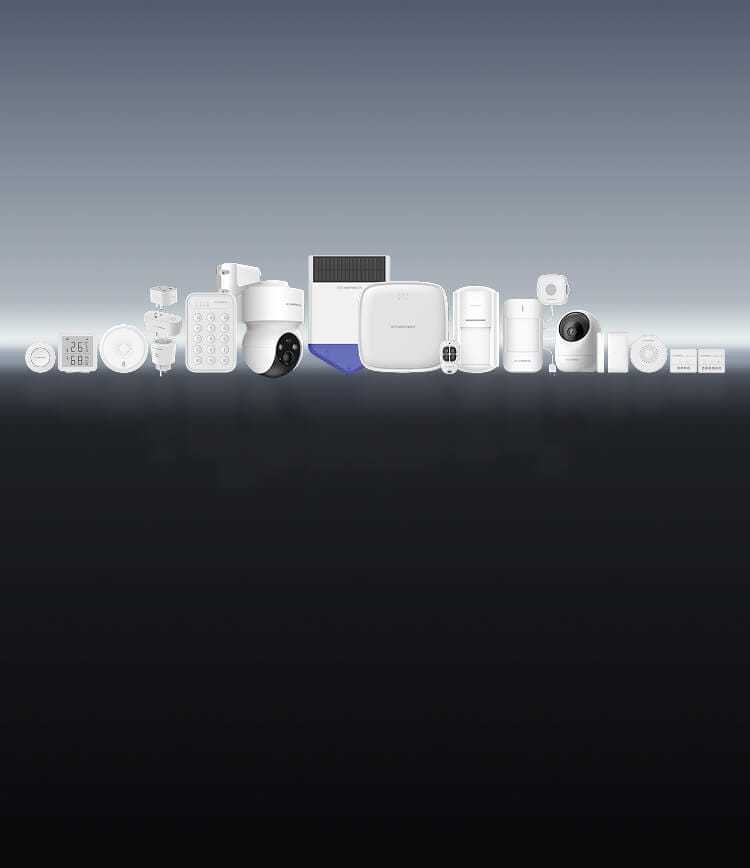
The shop security starter kit flips this model. One pre-configured package contains everything the shop needs: one hub, three to five sensors, one siren, a keyfob, and a panic button. Fixed price. No custom quoting. No supply chain delays. The installer carries the kit in their vehicle, installs it the same day the shop owner says yes, and walks out with a working system that was demonstrated, not promised.
What the Kit Contains
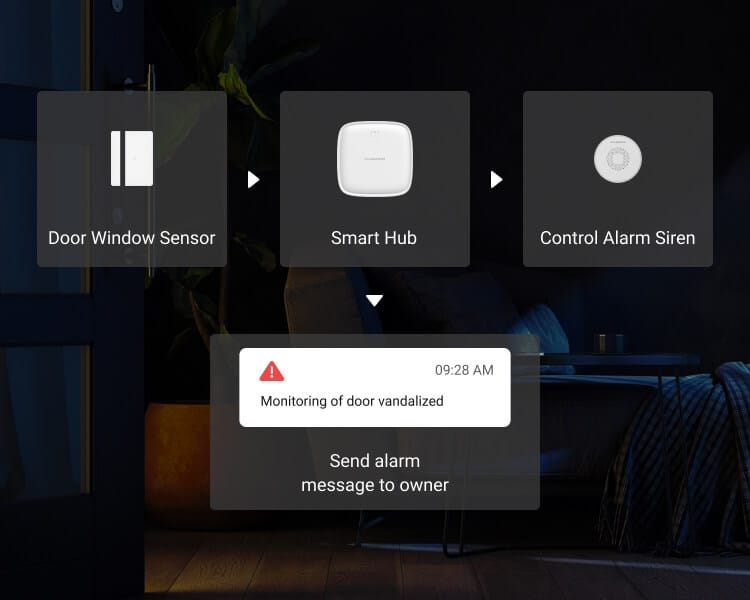
- Roombanker Hub — Central controller supporting up to 128 wireless devices. 868 MHz operation penetrates concrete, stone, and steel. EN 50131 Grade 2 certified. Cloud-connected via AWS infrastructure for remote arm/disarm and push notifications.
- PIR Motion Sensors (2–3) — Covering the shop floor, stockroom, and entrance. 5+ year battery life. Pet immune variant available for shops with resident animals.
- Door/Window Magnetic Sensors (1–2) — Main entrance and rear exit. Visible tamper detection alerts the shop owner and the ARC if the door is forced.
- Outdoor Alarm Siren — 105 dB audible deterrent with LED strobe and tamper protection. Solar-powered option available for storefronts without external power access.
- Keyfob and Panic Button — The shop owner arms and disarms with the keyfob during opening and closing. The panic button under the counter triggers a silent alarm to the ARC.
Pairing uses QR code scanning via the RB Link app: 8 seconds per device, no onboarding screen required. From unboxing to fully armed, a trained installer completes the job in two to three hours.
Why Does the Shop Security Kit Close in One Visit?
The most expensive part of any security installation is the second visit. Returning to commission a system, pair sensors that were missed, or chase a signature on a revised quote — each return visit erodes margin and delays payment.
Wireless technology eliminates the first barrier: no cabling means no downtime for the shop. The shop owner does not need to close for the day. The installer works around the stockroom shelving, the refrigerated counter, the steel shutter mechanism. The hub is mounted in under 10 minutes. Sensors are placed using the RB Link app, which confirms real-time signal strength before the installer moves to the next device.
By the time the installer packs up, the shop owner has seen the system working on their phone. They have tested the panic button. They have watched the siren trigger. The sale is closed because the value is demonstrated in person — not deferred to a follow-up visit that may never happen.
Real Installer Economics: From Project to Pipeline
Here is the financial model that makes the shop security starter kit a repeatable business, not just a product:
| Metric | Value |
|---|---|
| Revenue per install | EUR 400–600 |
| Installation time | 2–3 hours |
| Installs per week (one installer) | 3 |
| Weekly revenue | EUR 1,200–1,800 |
| Monthly revenue (4 weeks) | EUR 4,800–7,200 |
| Annual revenue (one installer) | EUR 57,600–86,400 |
These figures assume no upsell, no recurring monitoring revenue, and no maintenance contracts. In practice, every additional service layer increases the lifetime value of each customer while the acquisition cost remains the same — the same EUR 400 install generates EUR 2,000+ over 24 months once upgrades and services are factored in.
The Modular Upsell Path
The starter kit is the entry point, not the ceiling. A shop that experiences the value of a working alarm system is predisposed to add layers over time. The installer controls the upgrade sequence:
- Basic Kit — Hub, motion sensors, door sensors, siren, keyfob, panic button. Installed and commissioned in one visit. EUR 400–500.
- Add Video — One or two indoor or outdoor IP cameras covering the sales floor and entrance. Cloud recording with AWS-hosted storage accessible via the RB Link app. EUR 200–300 additional.
- ARC Monitoring — Connect the system to an Alarm Receiving Center via contact-ID protocol or IP reporting. Recurring monthly revenue for the installer. EUR 15–25 per month pass-through.
- Maintenance Plan — Annual battery check, sensor walk test, firmware update, and tamper inspection. EUR 100–150 per year per site.
A shop owner who starts with the basic kit, adds one camera in month six, and signs a monitoring contract generates roughly 3x the lifetime value of the initial installation. The installer who owns the customer relationship owns every step of that curve.
Built for European Realities: Stone, Steel, and Concrete
European small shops are not drywall boxes. They are built into stone buildings in Greek villages, behind steel roll-down shutters in Istanbul, inside communist-era concrete blocks in Bucharest. These environments degrade consumer Wi-Fi mesh systems and limit the effective range of generic wireless protocols that lack the power budget to push through dense materials.
The Roombanker RBF Protocol operates at 868 MHz — the license-free SRD band harmonized across Europe. In open air, it reaches 3500 meters (2.17 miles). Through three concrete floors or two stone walls, it maintains reliable communication without requiring additional repeaters. For the installer working in dense urban settings, this means every sensor reaches the hub regardless of building materials[^2].
Solar-powered options for the outdoor siren and select sensors provide flexibility for shops where running external power is impractical — glass-front storefronts in historic districts, rented spaces with drilling restrictions, or temporary fit-outs in shopping centres.
The Partner Advantage: One Country, One Distributor
Roombanker operates a One Country One Distributor model: in each European market, a single national distribution partner holds exclusive rights. For the installer, this creates two structural advantages that consumer-brand distribution cannot match.
Pricing protection. No competing installer undercuts you on the same hardware because no parallel import channel exists in your territory. The kit price you quote today will be the same next quarter — you invest in sales effort without worrying about margin erosion from cross-border competition.
Training and support. The national distributor provides product training, installation certification, and first-line technical support. This matters most when you are scaling from one installation per week to three — consistent support keeps your truck rolls predictable and your callbacks rare.
Installers evaluating the shop security kit model can review the Roombanker distributor evaluation guide to understand territory coverage and qualification criteria. Country-specific partner program pages list active distributors and their service zones.
Frequently Asked Questions About Shop Security Starter Kits
Do small shops actually spend EUR 400–600 on security?
Yes. A shop losing EUR 200–300 per month in stock theft breaks even on the installation in two months. The payback period is short enough that the purchase decision becomes rational rather than emotional. Most shop owners already know their shrinkage number — they just need someone to connect it to a solution.
What if the shop already has a wired alarm?
Wired systems in small retail are typically 10–15 years old, with no remote arm/disarm, no smartphone app, and no path to ARC monitoring or video integration. Replacing them with a wireless starter kit eliminates ongoing maintenance costs for aging cables and control panels. Offer a trade-in credit for the old panel — the removal saves the shop owner from paying a separate decommissioning contractor.
Does the wireless signal work through steel shutters?
The RBF Protocol at 868 MHz penetrates steel roll-down shutters reliably at ranges under 50 meters, which covers virtually any single-shop installation. For multi-tenant retail spaces — a shop within a shopping centre, for example — the hub should be positioned in a central stockroom or corridor to maintain line-of-sight to all sensors.
How long does installer training take?
Hands-on training for the shop security kit takes half a day. The national distributor typically runs quarterly certification sessions covering device pairing, optimal sensor placement for retail layouts, signal strength testing, and common troubleshooting. Most installers complete their first unsupervised installation within one week of training.
Can the system be monitored by a third-party ARC?
Yes. Roombanker hubs support connection to any Alarm Receiving Center using standard contact-ID protocol or IP-based reporting. The RB Link app also provides direct push notifications to the shop owner and up to five authorised users, which covers scenarios where ARC monitoring is not yet required.
What happens when the shop owner opens a second location?
This is where the standardized model compounds. The installer deploys the same package — same devices, same configuration, same pricing — at location two. The shop owner gets a consistent experience across both sites. The installer completes the second install faster than the first because every repetition reduces the per-site labour cost.
Turn Shop Security Into Your Growth Engine
The 2.3 million small retail shops across Turkey, Greece, Romania, and wider Europe represent a market that is structurally underserved. Enterprise providers ignore it because the ticket size is too small. Consumer brands cannot serve it because they lack Grade 2 compliance and professional ARC connectivity. The local installer who packages a standardized wireless kit, closes in one visit, and builds a service layer on top owns a repeatable business model that compounds with every new customer on the books.
This article serves as the Shop Security Sales Playbook — a complete walkthrough: pricing templates, a one-page proposal, an installation checklist, and upsell scripts adapted for the European retail market.
Subscribe to the Roombanker newsletter for monthly industry analysis, installer business models, and partner program updates.
Notes
[^1] Estimate based on Eurostat structural business statistics for retail trade (2024), counting enterprises with 0–9 employees in Turkey, Greece, Romania, Bulgaria, and neighbouring markets. Covers food retail, specialised stores, and service-point retailers. See Eurostat retail trade statistics.
[^2] Internal Roombanker range testing, Q1 2024. 50 residential and small-commercial sites across three countries. 868 MHz mode with hub positioned in central ground-floor location.