
A shop owner may worry about stock disappearing during opening hours, a break-in overnight and water reaching stored goods. Those losses need different measures. The best first investment is the one that addresses an exposed loss path and gives someone a workable way to respond.
Start with three questions: what could be lost, how could it happen, and who could act in time? Use the answers to choose physical protection, an intrusion alarm, merchandise protection, video, environmental detection or an operating procedure. A larger device list does not automatically cover more of the business’s risk.
Put the loss before the equipment
Walk the premises with the person who opens and closes it. Include delivery entrances, shared corridors, stockrooms and services such as water pipes. Separate problems that happen while staff are present from those that happen when the premises are empty.
| Business concern | Useful first measures | When additional detection helps |
|---|---|---|
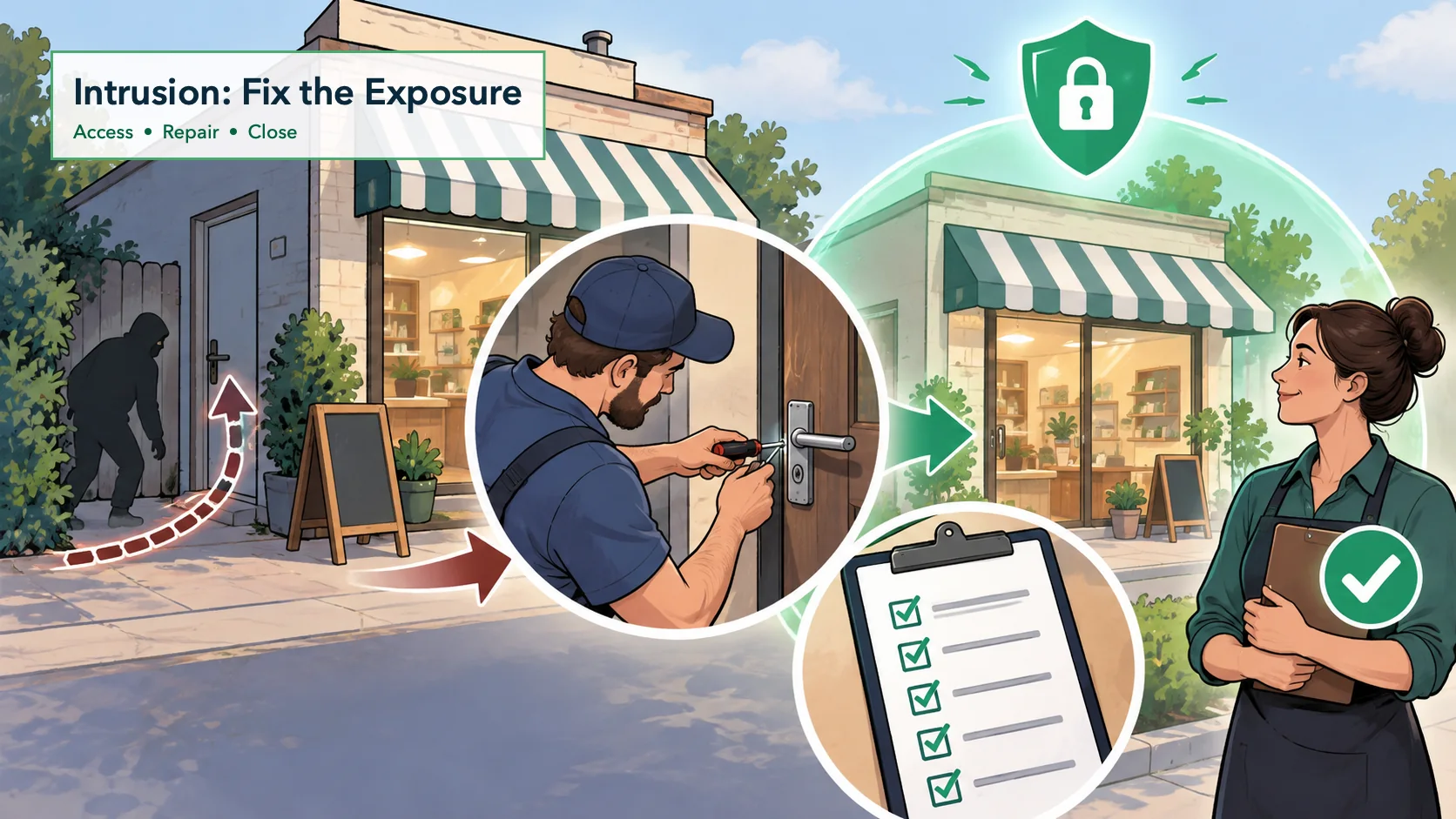
| Unwanted access after closing | Repair weak doors and locks; control keys; define a closing check | An intrusion alarm can report a protected opening or movement when the relevant area is armed |
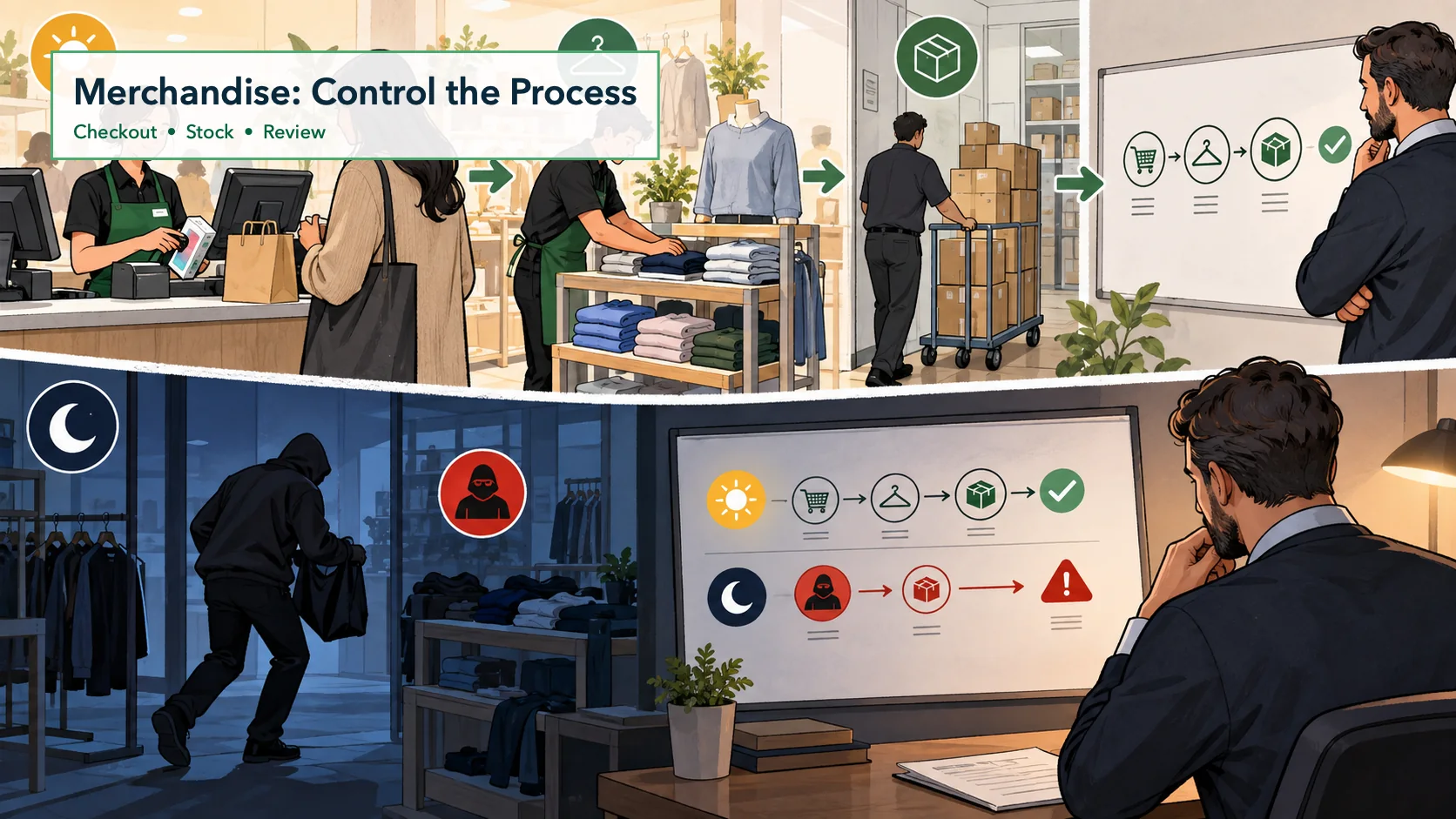
| Merchandise leaving during trading | Review display, stock handling and checkout procedures | Merchandise protection or an appropriate video system may address the actual loss process |
| Former staff retaining access | Recover keys and revoke individual credentials | Review alarm users separately from door-access users; changing one system may not change the other |
| A leak near vulnerable stock | Move stock away from the exposure and maintain the pipework | A suitable water detector can warn a named person who can investigate or arrange isolation |
| Account compromise or lost business data | Assign account access, use multifactor authentication and maintain recoverable backups | IT monitoring and support address a different problem from a building alarm |
This exercise also identifies inexpensive work that should happen before installation. A door that does not close reliably can undermine both its lock and the alarm routine. Fixing it is part of the protection plan.

Decide whether an intrusion alarm answers the problem
An intrusion alarm is useful when the business needs to detect entry or movement in protected areas and initiate configured warning or reporting actions. Door contacts, motion detectors, a Hub or control panel, user controls and warning devices perform different parts of that job.
Consider a small office above a public shop. Customers legitimately move across the sales floor all day. The office may still need restricted access, while the whole premises needs protection after closing. The important purchase requirement is whether the proposed system can support the required protection states and user permissions. A motion detector on the sales floor alone cannot distinguish a customer from an intruder.
Roombanker’s professional wireless intrusion alarm approach connects compatible field devices to an alarm Hub. For a finished shop, wireless devices can reduce the need for signal cabling to each point. The installer still needs to prove the links at the installed positions and demonstrate the agreed alarm behaviour. Use the business burglar alarm guide to compare architecture and reporting arrangements.
Make detection lead to an action
An alert is useful only if its recipient can understand it and take the agreed next step. Decide who receives an alarm during opening hours, at night and when the owner is away. A mobile notification and a contracted monitoring service are different arrangements.
If the only recipient routinely cannot answer at night, adding another detector does not resolve that gap. Assign a suitable alternate recipient or evaluate a monitoring service. If professional monitoring is selected, agree what the service receives, how it verifies events and what response procedure applies. Do not treat notification delivery as a promise that assistance will arrive.
Video may help review an incident, but the required view, lighting, recording and access to footage must be specified. A standard PIR detector is not automatically a camera. Similarly, a panic button is a deliberate request for help whose recipients and response arrangements need to be established; it cannot guarantee employee safety.
Keep fire, water and cyber protection in the right plan
Fire detection and evacuation should be addressed through the applicable fire-safety design for the premises. A smoke detector added to another platform does not, by itself, establish that the building’s fire-alarm requirements have been met. Ask the responsible specialist to define the system and maintenance requirements.
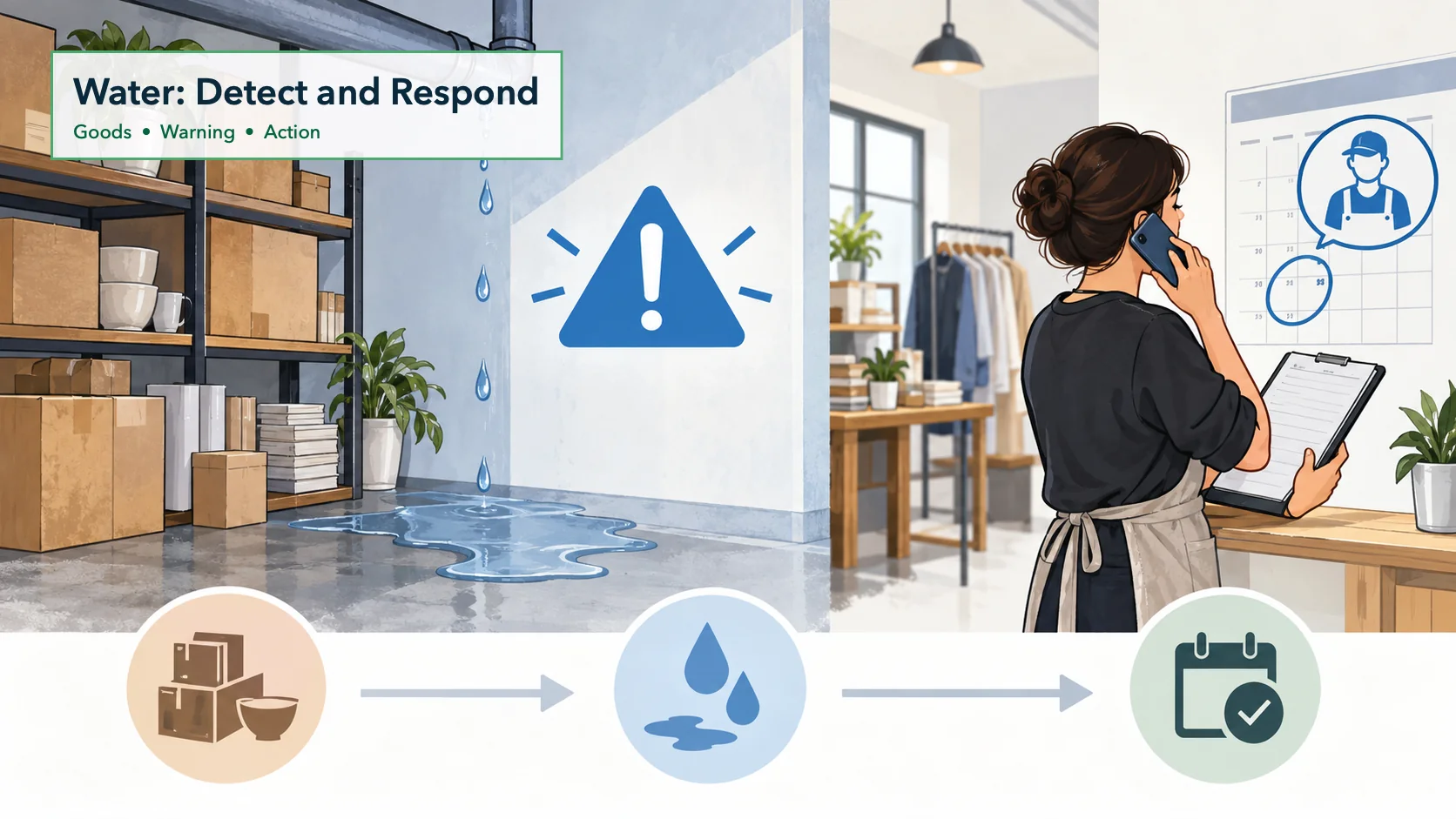
For water, choose the detection point around where water is likely to collect and who can respond. Detection does not imply automatic shutoff: that requires a separately specified and tested control arrangement.
For business accounts, enable multifactor authentication where supported, remove unused access and maintain backups that can be restored. These are part of a separate IT plan; an intrusion Hub does not replace them. CISA’s small-business guidance explains why account protection matters.

Spend against a defined scope
Ask suppliers to quote the same protected areas, operating requirements and response arrangements. Separate equipment and installation from recurring connectivity, monitoring and maintenance. A cheaper package that omits a stockroom or commissioning is a different proposal.

Before accepting it, have the installer demonstrate a normal opening, closing and alarm event. The staff member who will operate the system should be able to identify its state and explain what to do when a warning appears. For the detailed comparison, use how to choose a security alarm system.
Take the site plan, loss priorities and daily routine to your supplier. That gives the discussion a concrete starting point and keeps the budget focused on the business’s actual exposures.