
Saudi Arabia offers distinct opportunities in residential development, commercial fit-outs and larger building projects. For an alarm distributor or integrator, the useful question is which of those opportunities matches the team’s delivery capability. A national development programme signals activity; it does not establish the size of the addressable burglar-alarm market or the value of a particular sales pipeline.
Evaluate the market through a chosen project segment, identifiable buyers and requirements that can be delivered locally. Keep professional intrusion protection distinct from home automation and wider building management, even when a project asks them to exchange information.
Read development signals at their proper scale
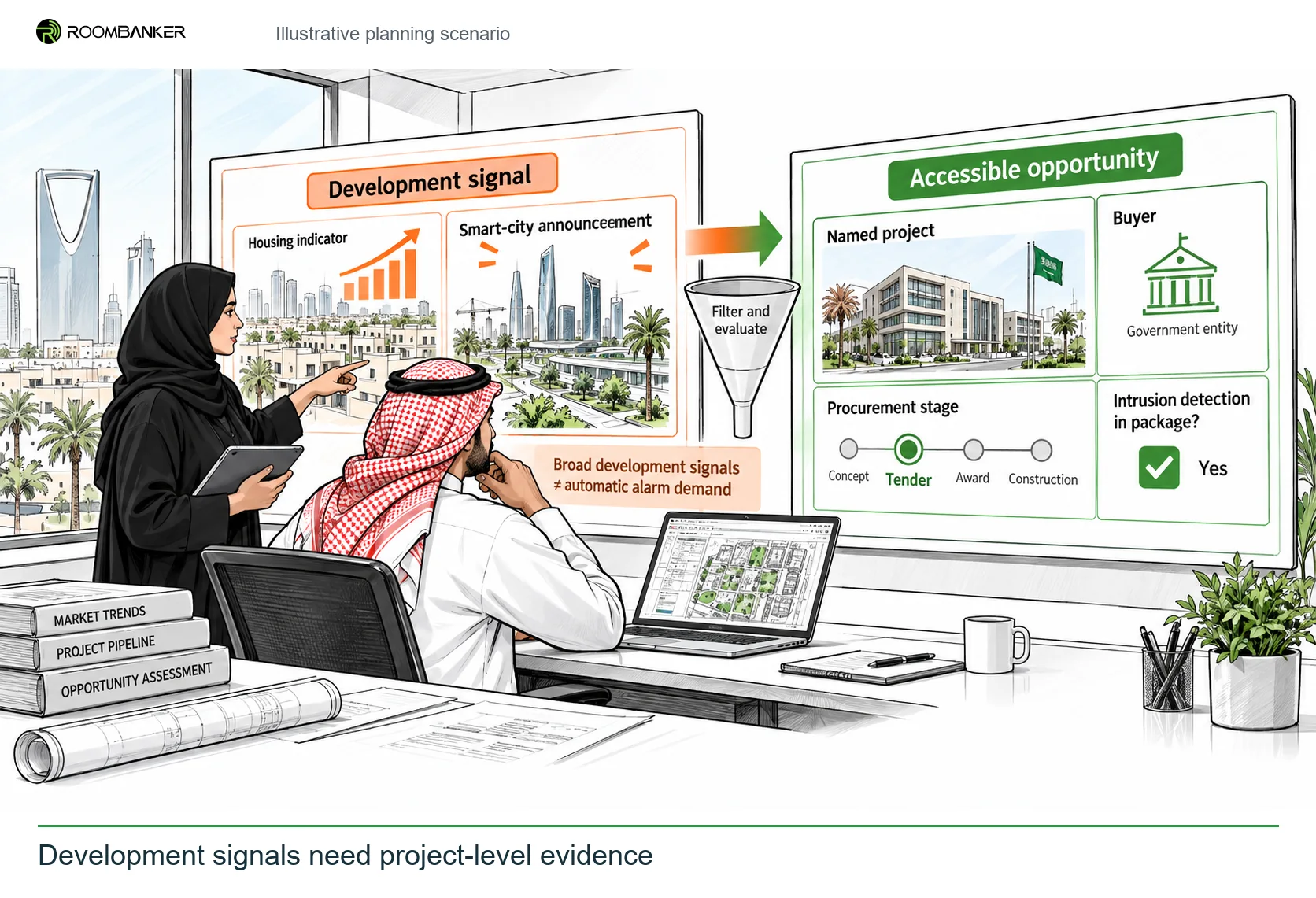
The Saudi Ministry of Municipalities and Housing reported that Saudi family homeownership reached 65.4% at the end of 2024. This is a housing indicator, not a measure of alarm installations or smart-building security revenue. It supports examining residential delivery channels; it cannot be multiplied into an alarm-sales forecast without further evidence. Housing Program Annual Report announcement.
In August 2022, KAFD announced a memorandum with SenseTime for a smart-city-platform pilot. This historical example does not establish a current procurement opportunity. It shows a named project’s technology activity, not that all Saudi buildings use the same architecture or that any alarm manufacturer participates in it. KAFD’s announcement.
The commercial implication is to separate a development signal from an accessible opportunity. Ask which organisation is buying, what procurement stage it has reached, and which package includes intrusion detection. A large project’s headline investment is not the available budget for an alarm supplier.
Choose a segment before choosing a route to market
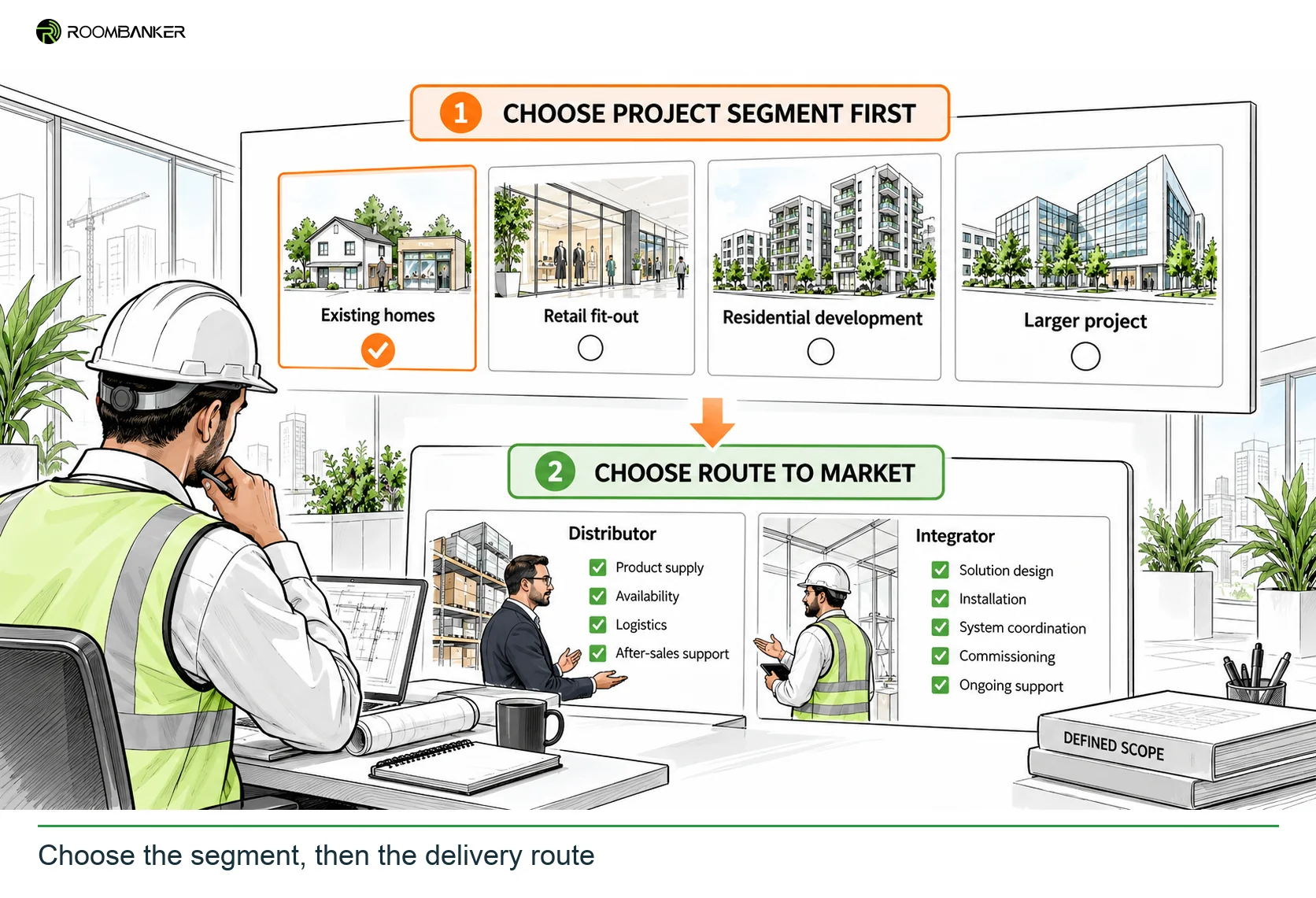
| Candidate segment | Questions that define a real opportunity | Delivery capability to evaluate |
|---|---|---|
| Existing homes and small businesses | Who decides on the upgrade, and what existing finishes or systems remain? | Survey, suitable product supply, installation and reachable after-sales support |
| Retail and commercial fit-outs | Who owns the alarm scope: tenant, landlord or fit-out contractor? | Coordination with access, working hours, handover and ongoing service |
| Residential developments | Is the alarm supplied to individual occupants or managed across shared property? | Clear division of private and common-area responsibilities |
| Larger building projects | Who specifies interfaces and accepts completed work? | Engineering, interface documentation, commissioning and maintenance capacity |
These are possible sales routes to investigate, not claims about their market shares. A distributor can add value through product availability and technical enablement, while an integrator delivers a defined project scope. Neither role automatically replaces the other.
For example, a tenant opening a retail unit may control the shop alarm while the landlord manages common-area systems. The installer needs to identify that boundary before proposing a building-wide integration. A residential buyer replacing an existing alarm may have a much narrower need and a different purchasing process.
Translate “integration” into specific exchanges
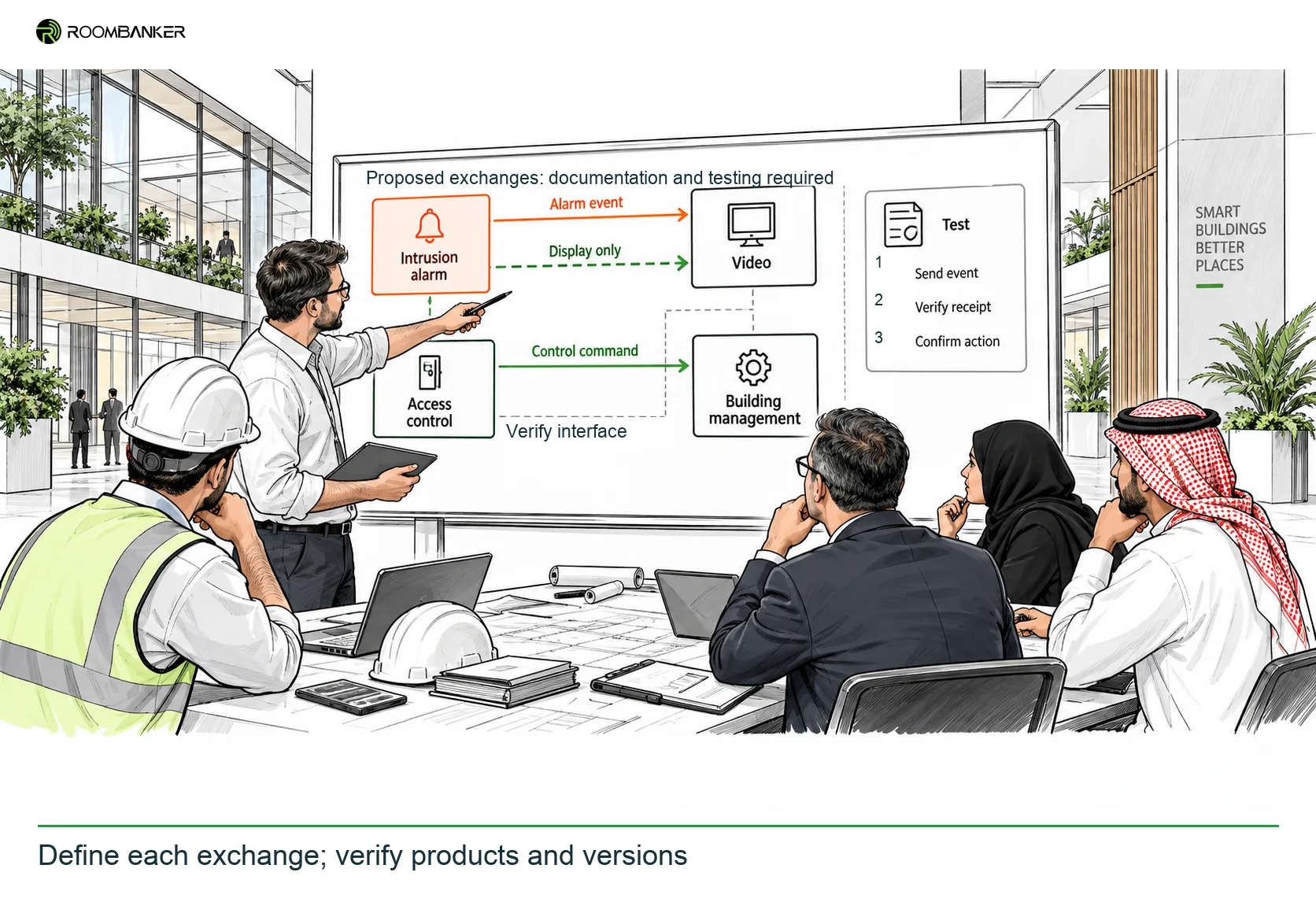
A smart-building request may mention intrusion, access control, video and building management together. Break that request into concrete exchanges: which system sends which event, which system receives it, and whether the receiving system displays information or issues a control command.
An intrusion alarm still needs to detect protected events, apply its operating rules and carry out the agreed warning and reporting actions. A building-management display is not automatically an alarm receiving centre. A camera on the same network is not automatically linked to an alarm event.
For every proposed exchange, obtain documentation for the actual products and versions and define a test. If an interface is not supported, retain separate operation or change the specified equipment; do not promise that a general “open platform” will resolve it later. This is where integration capability becomes a deliverable rather than a sales label.
Evaluate wireless at the building level
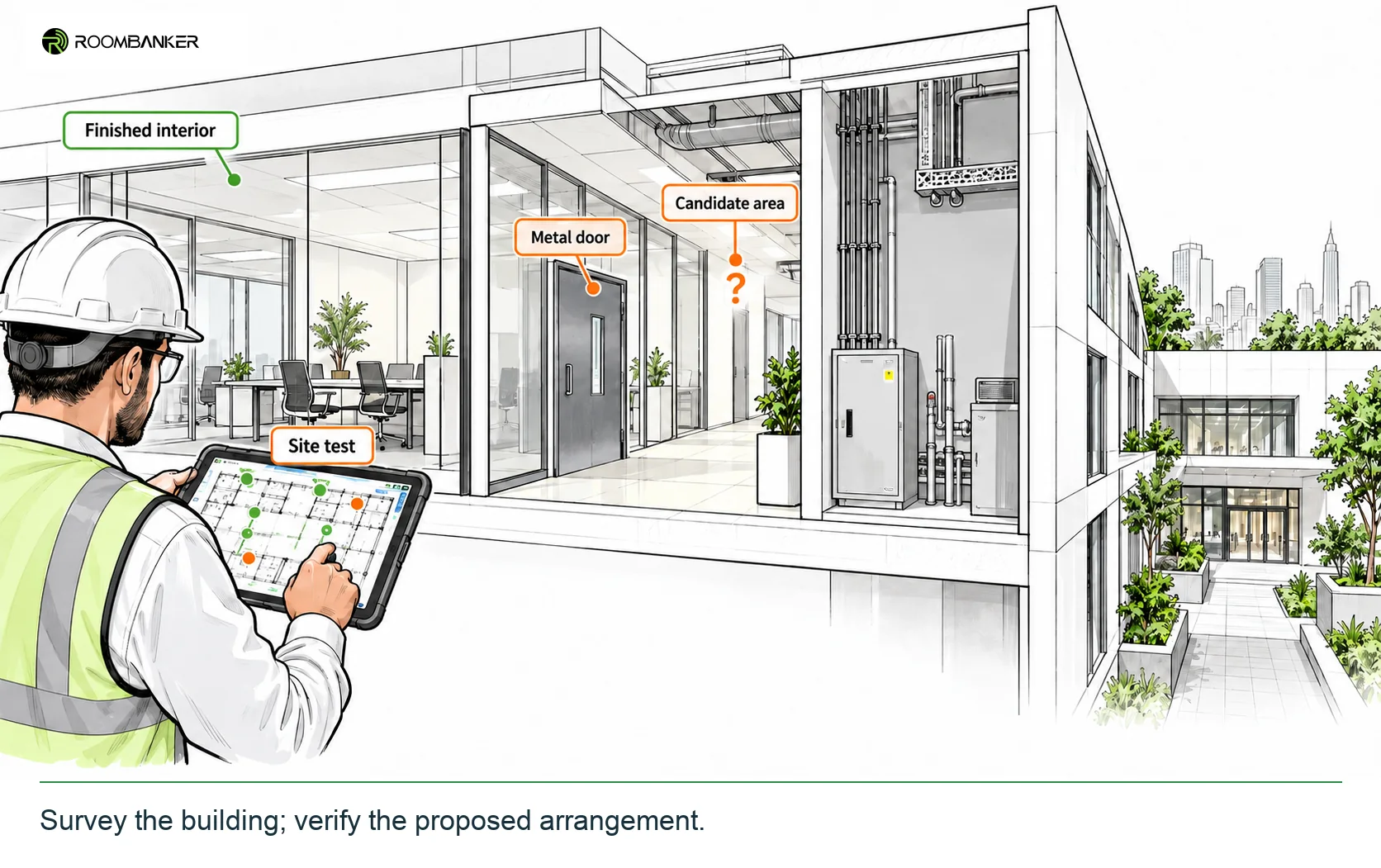
Wireless field devices can be useful in completed interiors where new signal cabling would add work. Their suitability depends on the required points and the actual building. Partitions, metal doors, services and the chosen equipment positions belong in the survey and final-position checks.
Roombanker’s role is professional wireless intrusion alarm: compatible detectors, controls and warning devices communicate with an alarm Hub. The wireless alarm architecture guide separates that local device link from onward reporting.
For a Saudi project, evaluate the exact regional product variant and the project’s required reporting arrangement. An open-air range figure does not prove coverage through a particular tower or compound, and a country name does not remove the need for a site test.
Qualify the product and the delivery partner separately
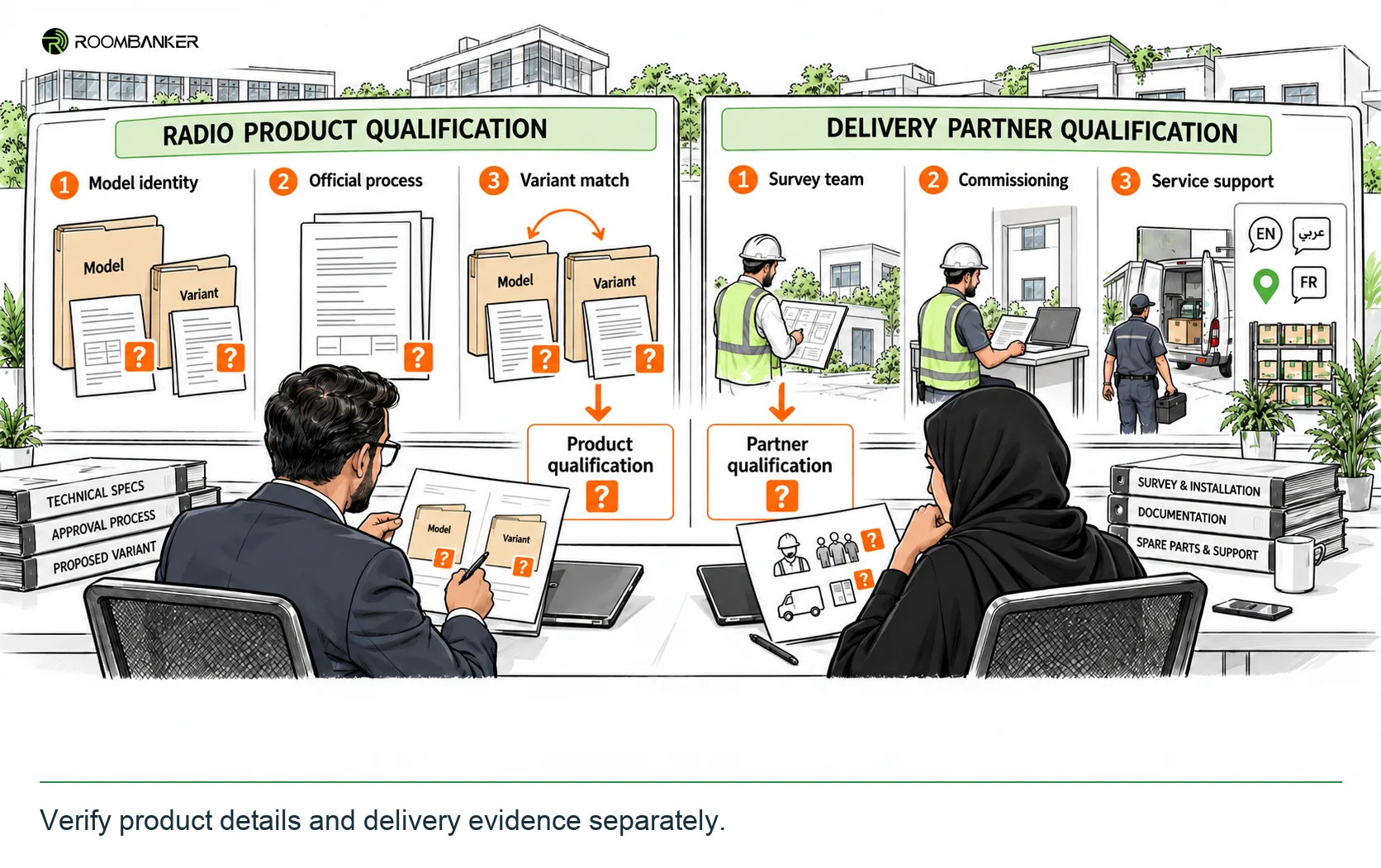
CST provides an approved-devices directory. Use the applicable official process and exact model identity when checking a proposed radio product; a certificate for a different variant or a foreign-market claim should not be treated as the answer for the intended supply. Have the responsible importer or project specialist determine the requirements that apply to that product and project.
Separately, ask a prospective delivery partner who performs the survey, commissioning and service visits, which languages the operator documentation supports, and how replacement equipment will be obtained. Request evidence of the proposed arrangement. Do not assume a regional sales contact means local stock, an engineering office or an established support network.
This applies to Roombanker discussions as well. Specify the project and location, then confirm available product variants, documentation and partner support before putting them into a customer proposal.
Build a defensible opportunity list
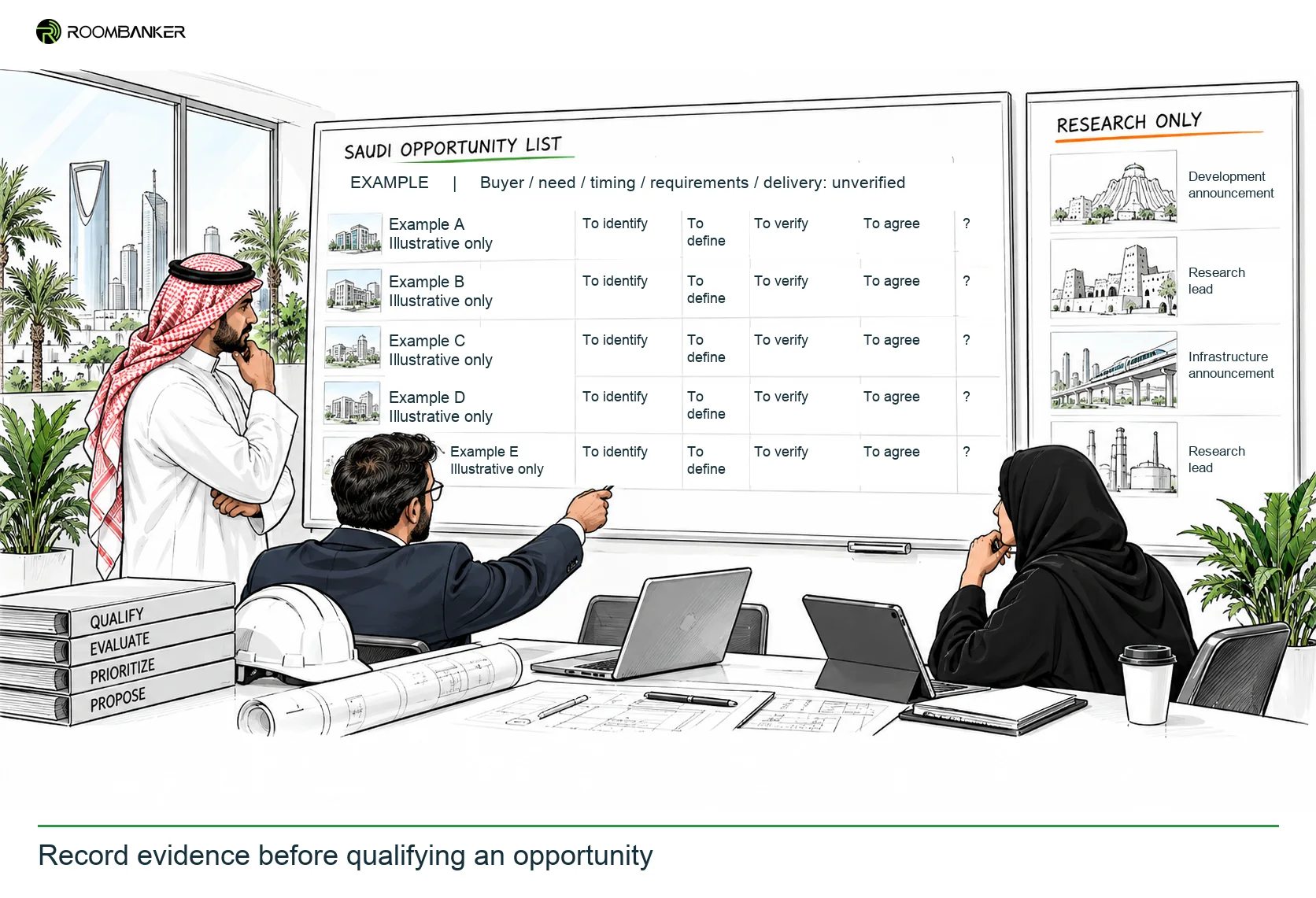
Create a short list of identifiable projects or customer groups. For each, record the buyer, alarm problem, procurement timing, applicable product requirements and named delivery route. Keep development announcements in a separate research column until they connect to an actual opportunity.
Prioritise opportunities where both the protection requirement and delivery responsibility can be described. Where a building interface remains unresolved, resolve that interface before pricing it as included. Where local support is not established, agree that arrangement before promising service.
Bring this information to a Roombanker partnership discussion. The useful outcome is a defined evaluation and delivery plan for the chosen segment—not an unsupported market-size forecast or a promise to serve every type of Saudi building.