
Motion detector false alarms are common in security systems. They do not always mean the device is broken. In many cases, the detector is reacting to something in the environment that looks like movement or heat change inside its detection area.
This is especially true for PIR motion detectors. A PIR detector does not “see” a person like a camera. It reacts to changes in infrared energy. When a warm object moves across the detection zones, the sensor may interpret that change as motion.
This is why pets, sunlight, HVAC airflow, insects, moving curtains, open windows, wrong sensitivity settings, and poor placement can all lead to motion sensor false alarms.
Reducing false alarms is not the job of one single feature. It depends on detector design, installation, sensitivity settings, pet immunity, temperature compensation, maintenance, and system testing working together. Professional devices can help reduce false alarms, but no PIR motion detector can guarantee zero false alarms in every environment.
Why Do Motion Detector False Alarms Happen?
A PIR motion detector works by detecting changes in infrared levels within its detection area. People, animals, and warm objects emit infrared energy. When the detector sees a changing heat pattern across its lens zones, it may send an alarm signal to the security system.

This means a PIR detector is not only affected by people walking through a room. It can also be affected by environmental changes.
For example, a pet moving across the floor may trigger detection if it enters the protected zone. Sunlight reflecting from glass or a shiny surface may create changing heat patterns. Warm air from a heater or HVAC vent may move across the detector’s field of view. Insects close to the lens may appear large to the sensor because they are very near the detection area.
Poor installation can also create false alarm problems. If the detector is aimed at a window, heat source, moving curtain, or outdoor area with changing temperature, the system may become unstable.

Roombanker indoor and outdoor PIR detectors are designed for different security environments, but the basic principle remains the same: the detector, placement, settings, and environment must work together.
Common Causes of Motion Sensor False Alarms
The following table summarizes common motion sensor false alarm causes and practical ways to reduce them.
| Cause | Why It Triggers PIR | How to Reduce It |
|---|---|---|
| Pets or animals | A moving warm body may enter the detection zone | Use pet immunity where suitable, follow mounting height guidance, and keep pets away from key detection areas |
| Direct sunlight or reflections | Sunlight can create changing heat patterns on floors, walls, or glass | Avoid pointing the detector at windows, reflective surfaces, or strong sunlight paths |
| HVAC, heaters, or fireplaces | Moving warm or cold air can change infrared levels | Keep detectors away from vents, heaters, fireplaces, and strong airflow |
| Moving curtains, plants, or balloons | Movement in the detection area may be interpreted as motion | Avoid aiming detectors at objects that can move with air currents |
| Insects near the lens | Small insects close to the lens may appear as large movement | Keep the lens clean and use detectors with sealed or insect-resistant design where suitable |
| Open windows or outdoor heat movement | Air movement and outdoor temperature changes can affect the detection area | Avoid placing indoor PIR detectors near open windows or unstable temperature areas |
| Wrong mounting height or angle | Poor placement may expose the detector to pets, heat sources, or unstable movement | Follow recommended installation height and aim across the likely intrusion path |
| Sensitivity set too high | The detector may react to minor movement or environmental changes | Adjust sensitivity according to room size, protection goal, and environment |
| Low battery or maintenance issues | Weak power or poor maintenance can cause unstable operation | Check battery status, device alerts, lens cleanliness, and system logs |
This checklist is useful because false alarms often come from the environment, not only from the detector itself.
How Professional PIR Motion Detectors Help Reduce False Alarms
Professional PIR motion detectors help reduce false alarms through a combination of optical design, sensor quality, housing design, signal processing, configuration, and testing workflow.
The Fresnel lens divides the detection area into zones. When a person moves across these zones, the detector reads changes in infrared energy. A well-designed lens helps create a more stable detection pattern for the intended protected area.

Sensor quality also matters. A stable PIR sensor helps the detector respond more consistently to real movement and reduce unstable readings caused by noise or environmental changes.
Housing design can also help. For example, a white light filter can reduce the effect of strong visible light. Roombanker Indoor PIR includes a 2000 lux white light filter as part of its indoor detector design.
Tamper protection is another professional feature. It does not directly prevent every false alarm, but it helps the system detect device interference or improper opening. Roombanker Indoor PIR includes rear tamper protection, and Roombanker Outdoor PIR also includes tamper protection.
Sensitivity settings are also important. A detector that allows sensitivity adjustment can be adapted to the actual room or outdoor area. Where app setting and testing are supported, installers can check device status, signal strength, and alarm behavior more efficiently after installation.
For example, Roombanker Indoor PIR supports RB Link App remote setting and testing, signal strength detection, low battery notification, adjustable sensitivity, temperature compensation, auto sensitivity adjustment, insect-proof sealed design, IFT, and tamper alarm. These features can support better installation and maintenance, but they still need correct setup and testing.
Pet Immunity: Helpful, But Not a Guarantee
Pet immunity can help reduce pet-related false alarms, but it should not be understood as a guarantee. A pet-immune PIR detector still depends on installation height, lens direction, pet size, movement path, and room layout.
For example, a detector may be designed to ignore small pets moving near the floor. However, if a pet climbs onto furniture, jumps near the detector, or moves through a higher detection zone, it may still trigger an alarm.
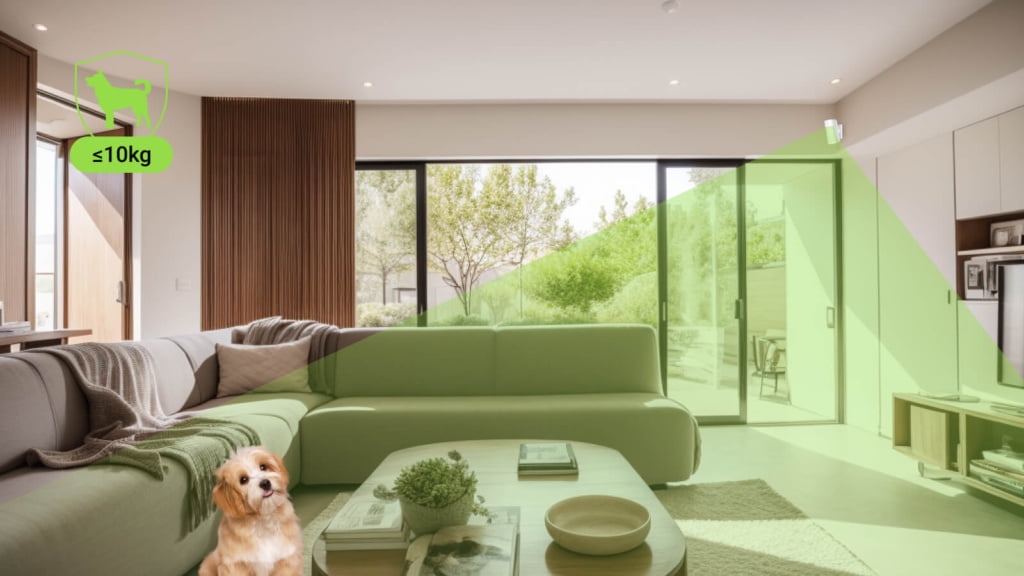
Roombanker Indoor PIR supports pet immunity up to 10 kg, subject to installation height and environment. This means installers should still follow the recommended mounting height and avoid aiming the detector where pets often climb or jump.
Roombanker Outdoor PIR supports pet immunity up to 35 kg. However, outdoor environments are more complex. Animals, temperature changes, moving plants, and sunlight can all affect the detection environment.
The practical rule is clear: pet immunity helps reduce false alarms under suitable installation conditions, but it does not stop all pet-related false alarms.
Temperature Compensation and Sensitivity Settings
Temperature affects PIR detection because PIR sensors react to infrared differences. When the surrounding temperature becomes close to human body temperature, the detector may need compensation to maintain stable detection performance.
Heat sources can also create problems. Warm airflow from heaters, air conditioners, fireplaces, or vents can move across the detection area and create changing infrared patterns.
Temperature compensation helps the detector adapt to environmental changes. Roombanker Indoor PIR includes temperature compensation and analog temperature compensation. Roombanker Outdoor PIR includes digital temperature compensation according to its public specifications.
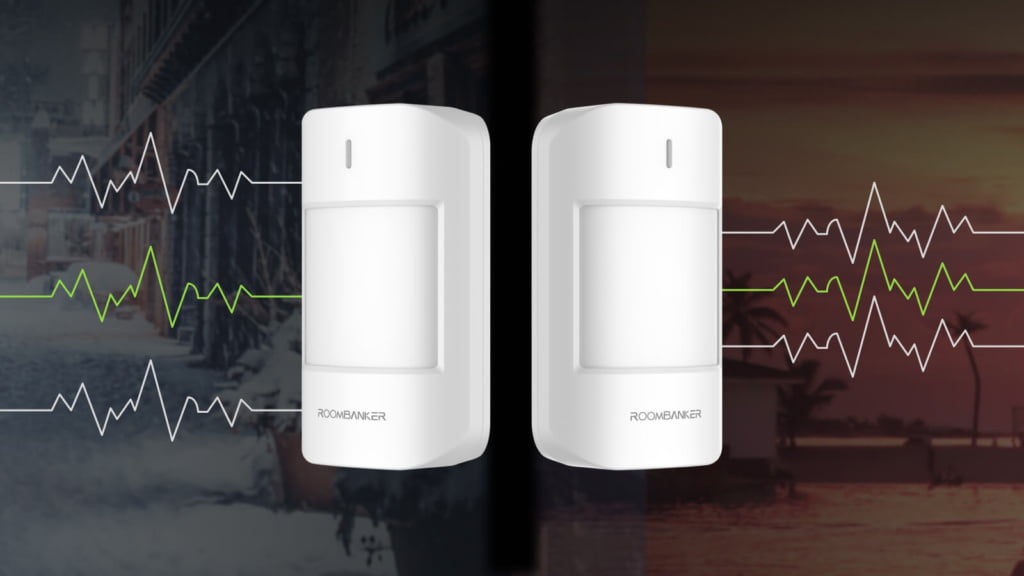
Sensitivity settings are also important. Higher sensitivity is not always more secure. If sensitivity is too high for the room, the detector may react to small movements, pets, airflow, or minor environmental changes.
In a small room with pets or heat sources, lower or adjusted sensitivity may be more stable. In a larger protected area, installers may need higher sensitivity, but only after testing the actual detection coverage.
Roombanker Outdoor PIR supports sensitivity settings including Low, Medium, High, and Auto. These settings help installers adapt the detector to the outdoor environment, but final performance still depends on correct placement and testing.
When Dual-Tech PIR + Microwave Helps Reduce False Alarms
In more complex environments, dual-tech detection can help reduce certain false alarms. A dual-tech detector usually combines PIR detection with microwave detection. Instead of relying on one detection principle, the system can require both technologies to confirm movement.
This can be useful in outdoor or semi-outdoor environments where temperature changes, sunlight, moving plants, and animals may affect PIR detection. Microwave detection reacts differently from PIR, so combining both can improve stability in suitable applications.
Roombanker Outdoor PIR is a dual-tech outdoor motion detector using PIR + microwave. It has a 16 m detection range, 90° detection angle, pet immunity up to 35 kg, IP54 protection, digital temperature compensation, sensitivity settings, and recommended mounting height from 1.8 m to 2.2 m.

However, dual-tech is not always necessary for every indoor room. A well-installed indoor PIR detector may be enough for many normal indoor spaces.
Dual-tech also does not eliminate all false alarms. It helps reduce certain false alarms under suitable conditions, but installation, sensitivity settings, environment, and testing still matter.
Installation Tips to Reduce Motion Detector False Alarms
Installation is one of the most important factors in reducing motion detector false alarms. Even a good detector can perform poorly if installed in the wrong location.
Use the following checklist during installation:
- Avoid direct sunlight: Do not point the detector directly at windows or strong sunlight paths.
- Avoid HVAC and heaters: Keep the detector away from air vents, heaters, fireplaces, and strong airflow.
- Avoid open windows: Outdoor heat movement and airflow can create unstable detection conditions.
- Avoid moving curtains and plants: Objects moving in airflow can trigger detection.
- Follow recommended mounting height: Roombanker Indoor PIR is recommended at 1.8 m to 2.4 m. Roombanker Outdoor PIR is recommended at 1.8 m to 2.2 m.
- Aim across the intrusion path: PIR detectors usually work best when a person moves across detection zones, not directly toward the detector.
- Consider pets: Keep pets away from key detection zones where possible, and avoid aiming the detector at furniture pets may climb.
- Test after installation: Use walk testing and system event checking to confirm coverage and stability.
No single installation position works for every room or outdoor area. Installers should adjust placement based on the actual site.
Troubleshooting Checklist: What to Check After a False Alarm
When a false alarm happens, the first step is to identify the cause. Do not assume the detector is faulty before checking the environment.
A practical troubleshooting sequence includes:
- Check the event time and room condition. Was it day or night? Was sunlight entering the room? Was heating or air conditioning running?
- Look for pets, insects, curtains, plants, or balloons. Anything moving in the detection area can affect the sensor.
- Check window direction and sunlight reflection. Reflections from glass, mirrors, or shiny floors may create heat changes.
- Check battery or device status. Low battery, weak signal, or device alerts should be reviewed.
- Review sensitivity settings. If sensitivity is too high, adjust it according to the environment.
- Run a walk test. Confirm whether the detector responds correctly to real movement.
- Adjust placement if needed. If the detector faces a heat source or unstable area, relocation may be necessary.
- Ask installer or support if false alarms continue. Repeated false alarms may require deeper inspection.
Where supported, RB Link App remote setting and testing can help installers check configuration and device behavior. Signal strength detection, low battery notification, and app alert or event checking can also support troubleshooting.
Can False Alarms Be Eliminated Completely?
No. False alarms can be reduced, but they cannot be eliminated completely in every environment.
A professional PIR motion detector can help minimize false alarms through better detection design, temperature compensation, sensitivity settings, pet immunity, tamper protection, and testing workflow. Proper installation and maintenance can also reduce many common problems.
However, PIR detectors still respond to infrared changes and movement patterns. Complex environments, pets, airflow, sunlight, insects, and unexpected activity can still create false alarm conditions.
A realistic goal is not “no false alarms forever.” The goal is to reduce avoidable false alarms through proper detector selection, correct placement, suitable settings, regular maintenance, and system testing.
This is also why professional installation matters. A detector should be selected and configured for the actual room or outdoor area, not only based on its specification sheet.
FAQ
What causes motion detector false alarms?
Motion detector false alarms are often caused by pets, sunlight, HVAC airflow, heaters, insects, moving curtains, open windows, poor placement, wrong sensitivity settings, low battery, or maintenance issues.
Why does my motion sensor false alarm at night?
At night, false alarms may be caused by pets, insects near the lens, heating systems, curtains moving with airflow, or outdoor temperature changes near windows. Checking the event time and room condition can help identify the cause.
Can pets trigger PIR motion detectors?
Yes. Pets can trigger PIR motion detectors if they enter the detection zone, move close to the detector, or climb onto furniture. Pet immunity can help reduce this risk under suitable installation conditions, but it is not a guarantee.
Does pet immunity stop all false alarms?
No. Pet immunity helps reduce pet-related false alarms, but it cannot stop all of them. Pet size, movement path, installation height, lens direction, and room layout all affect performance.
Can sunlight trigger a PIR motion detector?
Yes. Direct sunlight or reflections can create changing heat patterns that may trigger a PIR detector. Avoid pointing the detector at windows, reflective surfaces, or areas with strong sunlight changes.
Can HVAC or heaters cause motion sensor false alarms?
Yes. Warm or cold airflow from HVAC systems, heaters, fireplaces, or vents can affect infrared levels in the detection area. Detectors should be installed away from strong airflow and heat sources.
Should I lower motion detector sensitivity?
It depends on the room and detection goal. Lowering sensitivity may help reduce false alarms in some environments, but it should be done after checking coverage. Higher sensitivity is not always more secure.
How do professional PIR motion detectors reduce false alarms?
Professional PIR motion detectors help reduce false alarms through better lens design, sensor stability, signal processing, light filtering, tamper protection, sensitivity settings, temperature compensation, app testing where supported, and proper installation.
Is dual-tech better than PIR for false alarm reduction?
Dual-tech PIR + microwave can help reduce certain false alarms in complex environments, especially outdoors. However, it is not always necessary for every indoor room and does not eliminate all false alarms.
Final Words
Motion detector false alarms are usually caused by a combination of detector behavior, installation conditions, and environmental factors. A PIR detector responds to infrared changes, so pets, sunlight, airflow, insects, curtains, and sensitivity settings can all affect performance.
The best way to reduce motion sensor false alarms is to combine proper detector selection, correct placement, suitable sensitivity, pet immunity where needed, temperature compensation, maintenance, and system testing.
Roombanker provides indoor and outdoor PIR motion detector options for different security environments. As with any professional alarm system, the final result depends on choosing the right detector for the site and testing it under real installation conditions.