
The detection sensitivity of a passive infrared sensor refers to the degree to which the sensor perceives changes in infrared radiation. It measures how small a change in infrared radiation the sensor can detect and trigger accordingly. When someone or other object enters the sensor’s detection range, it senses changes in infrared radiation and triggers corresponding actions, such as triggering an alarm or controlling other equipment.
People pay attention to the detection sensitivity of passive infrared sensors because it is directly related to the performance and reliability of the sensor. Higher detection sensitivity means that the sensor can detect smaller changes in infrared radiation, thereby improving the detection range and sensitivity of the target object, but false triggering may also occur. Lower sensitivity may fail to detect some important events, resulting in false negatives.
Also Read: What is PIR Sensor and How Does It Work?
What Is PIR Sensor with Sensitivity Adjustment?
The detection sensitivity of passive infrared sensors is usually adjustable. The working principle of adjustment is to adjust the sensor’s perceived trigger amount for changes in infrared radiation by changing the circuit parameters or settings inside the sensor. This can increase or decrease the sensor’s sensitivity to changes in infrared radiation.
Adjusting the detection sensitivity of the passive infrared sensor can be done in the following two ways:
Auto-Adjustment: Some passive infrared sensors have an auto-adjustment feature. This kind of sensor contains an automatic gain control (AGC) circuit or other adaptive mechanism, which can automatically adjust the sensitivity according to changes in the environment. For example, when the ambient temperature changes significantly, the sensor can automatically adjust the sensitivity to adapt to the environmental changes, thereby reducing the false alarm rate or false negative rate. Our PIR sensor supports independent floating threshold adjustment, which can effectively reduce the interference of environmental noise on detection results.
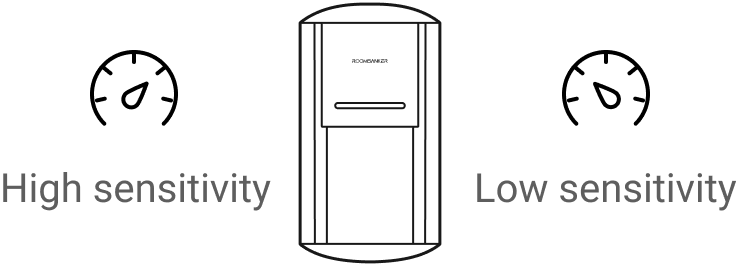
Manual Adjustment: Other passive infrared sensors may require manual setup or the use of an external controller for adjustment. Usually, there will be adjustable parameters or switches on the sensor to adjust the detection sensitivity. Users can manually adjust the sensitivity level or threshold of the sensor according to specific needs to adapt to different application scenarios.
Note: Our future 35kg PIR will support manual sensitivity adjustment. Set it on the APP and select low, medium and high sensitivity levels.
It should be noted that not all passive infrared sensors support automatic adjustment or manual adjustment. Exact adjustment methods and capabilities depend on the sensor model, manufacturer, and design. When selecting and using a sensor, you should carefully read the sensor’s technical specifications and user manual to understand its adjustment capabilities and methods.
Three PIR Sensitivity Levels: High, Mid, and Low
The sensitivity of sensor detection is usually expressed by the sensitivity level, low, medium, and high, which respectively indicate the range of changes in infrared radiation that can be perceived and the target triggering distance. Smaller temperature changes or farther detection ranges mean sensitivity. High, otherwise the sensitivity is low.
It is important to note that specific sensitivity values and standards may vary depending on the type, manufacturer, and design of the sensor. Therefore, there is no universally applicable criterion for determining what value can be considered high or low sensitivity. In general, high and low sensitivity applications will vary primarily based on specific application requirements and environmental conditions.
High sensitivity is generally used in the following scenarios:
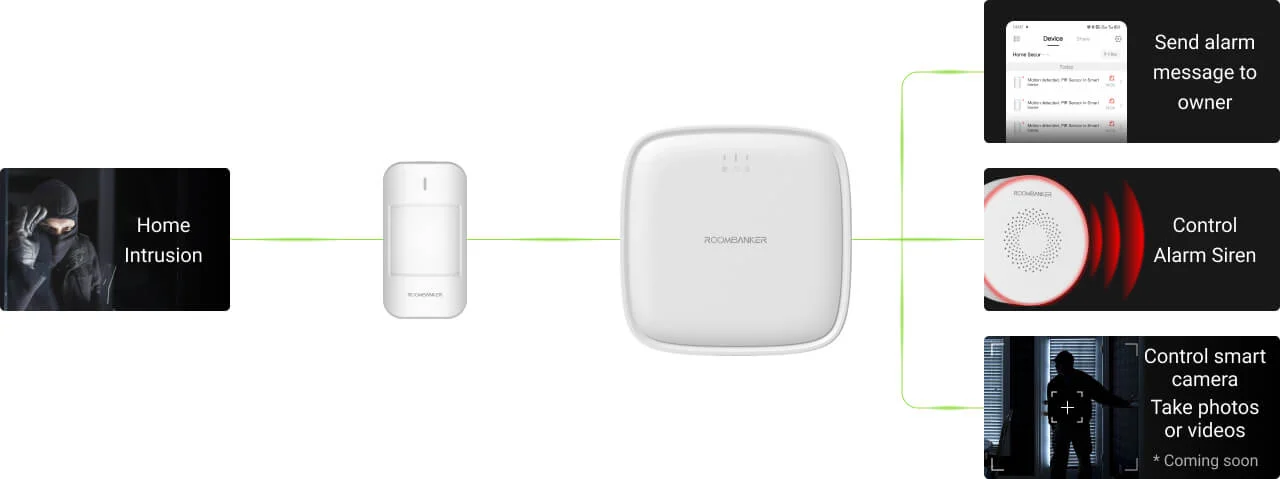
High sensitivity sensors are used in environments that require a high level of security, such as intrusion alarm systems, anti-burglar alarm systems, etc. Higher sensitivity range can ensure that the sensor detects target objects in a wider range, to detect potential threats early.
It also helps with human activity monitoring. This is generally applied in places, such as offices, stores, etc. High sensitivity can accurately detect the presence of human bodies and trigger corresponding control or security alarm systems.
Additionally, high sensitivity sensors help take immediate action when there is an intrusion in your house or store.
Low sensitivity is generally used in the following scenarios:
Coming to low sensitivity levels, they are usually used to reduce false alarms. It is obvious that there will be a lot of movement in the house. So, if you’re constantly entering and exiting the premises, it can trigger false alarms. However, if you set the PIR sensors to low sensitivity, it can prevent unnecessary interference.
If you use control lighting systems or other energy-saving appliances, low sensitivity sensors can ensure that control actions take place only when they are absolutely required.
Factors That Affect the PIR Motion Sensor Sensitivity
There are a lot of factors that influence the sensitivity of a PIR sensor. You need to make sure that you can avoid these aspects for accurate readings.
- The Distance and Angle: PIR sensors work by identifying objects based on their temperature. So, if an object is near the sensitivity range of the sensors, it will pick up the radiation and trigger the alarm. Additionally, if any object is at a right angle to the sensor, it will identify the object better.
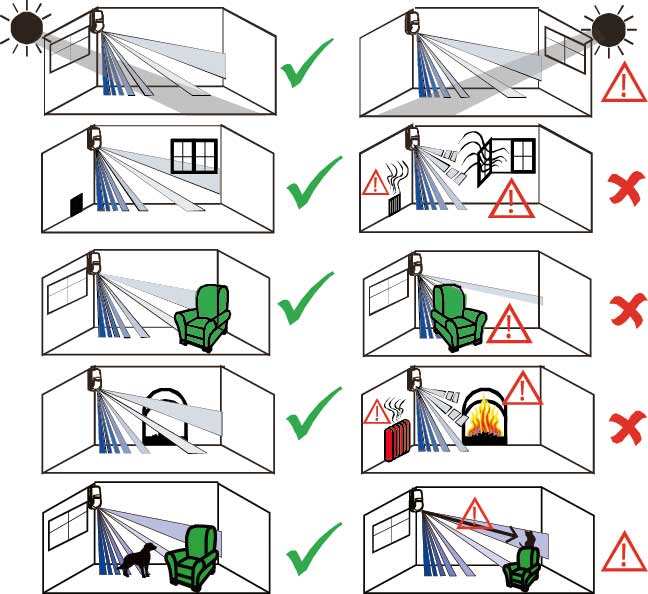
- Temperature Changes: If your PIR sensors have a high level of sensitivity, they will sense even the slightest change in temperature. On a hot sunny day, you might be walking in and out to put off the false alarm. It is best to install the PIR sensors away from your doors and windows to avoid getting false readings.
- Obstructions and Interference: If there is any obstruction in the way of the sensor’s detection range, it can cause false alarms. Additionally, any interference, such as direct sunlight or electromagnetic interference, may affect the sensor’s detection sensitivity. Make sure there are no obstructions or interferences around the sensor to reduce false alarms.
What to Consider When Buying a PIR Sensor with Sensitivity Adjustment?
First things first; you should consider the sensitivity of the PIR sensors that you are buying. This will determine how well the sensor can detect variations in the infrared light coming from the outside.
Here are some other important factors that you should consider when purchasing a sensor:
- Maximum triggering distance: You need to determine what spaces you are going to install the PIR sensors and if the sensor’s detection range can meet your requirements. This will help ensure that the sensor can meet your personal detection requirements.
- Anti-interference ability: The sensor should have anti-interference ability to reduce the probability of false alarms. This means that the sensor should not easily get triggered by the objects or lighting fixtures in its way.
- Installation and configuration: Another important factor is the ease of installation and configuration of the sensor. You should consider sensor size, mounting method, interface type, and configuration options for your place before buying the sensors.
- Reliability and durability: It is always important to invest in good quality sensors when you’re buying PIR sensors. This goes for every security equipment that you buy for your place. You need to consider the manufacturing quality, reliability ratings, longevity, etc. before investing in a high-quality PIR sensor.
- Cost-Effectiveness: The cost of the sensor is also one of the factors to consider when purchasing PIR sensors. The cost should justify the worth of its features. Buying an expensive PIR sensor that has unnecessary features is a waste of money. On the other hand, buying a cheap PIR sensor that does not fulfill its purpose is again an unnecessary expense. You need to weigh cost versus performance metrics for choosing the best PIR sensors for your needs.
Conclusion
Roombanker offers PIR sensors with automatic and manual sensitivity adjustment features to help you reduce false alarms in your home and office.
Roombanker is a reliable smart home security company that knows the ins and outs of security technology. Contact our expert security consultant to learn more about our pet-friendly PIR sensors.

what is pet friendly pir motion sensor
Roombanker Wireless Security Alarm System combines ease of use with professional-grade features, offering effortless DIY installation and set up while integrating professional-grade features, including advanced detectors, a dedicated security hub, and supporting integration with Alarm Receiving Centres, etc, making it the go-to choice for a reliable wireless security alarm system, supporting intrusion alarm, fire & water leak alarm, panic alarm, etc., serving an array of small business and residential properties.