
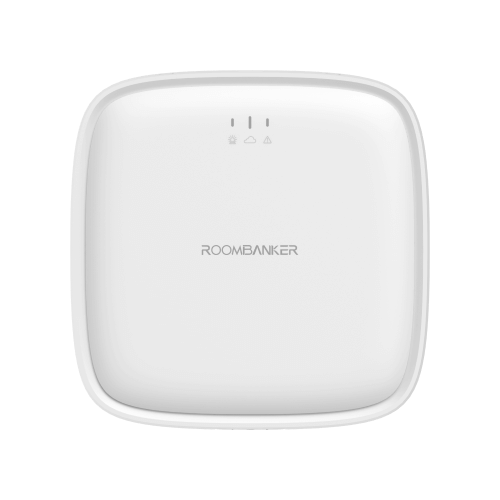
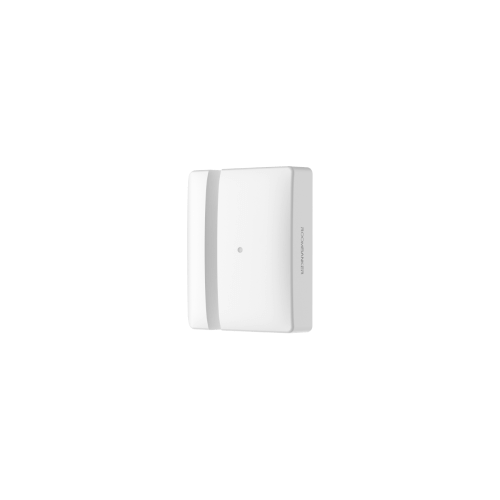
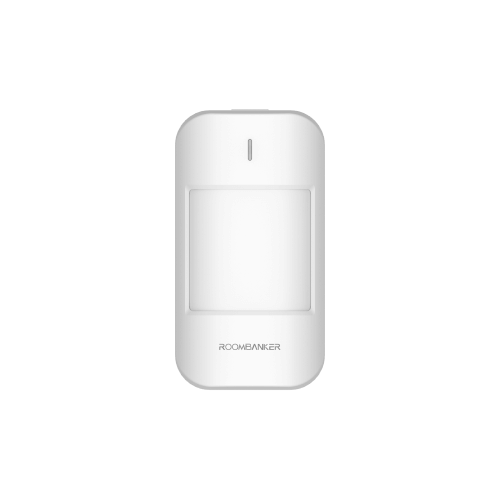



RBSS-PS2 Outdoor Motion Detector
PIR and microwave sensing for outdoor approach areas. Battery-powered installation and setup in RB Link help you put detection where your project needs it.

How does a dual-tech PIR and microwave motion detector work?
A dual-tech detector uses two sensing methods: passive infrared (PIR) senses infrared changes, while microwave sensing detects movement. RBSS-PS2 needs both inputs to trigger an alarm, helping reject disturbances picked up by just one sensor.
If you mount it beside a warehouse entrance, aim it so people walking toward the door cross both detection patterns. Test that route and nearby nuisance sources to check what triggers an alarm.
How does an outdoor dual-tech detector reduce false alarms?
PIR and microwave must both detect activity before RBSS-PS2 triggers an alarm. This helps filter out disturbances picked up by just one sensing method. Activity that affects both can still trigger it.
For example, if you cover an approach beside a hedge or road, keep moving branches and passing traffic outside the detection area where possible. Walk the approach route, then test likely nuisance sources nearby.
Does dual technology provide anti-miss detection?
RBSS-PS2 can miss movement when either sensor receives too weak a signal, because both inputs are needed for an alarm. Walk-test each approach and crossing route at the final mounting position.
For example, if you get no alarm when walking toward a side gate, check for obstructions, then review mounting and sensitivity and repeat the test.
PROJECT SPECIFICATIONS
Project Fit at a Glance
- Model
- RBSS-PS2
- Location
- Outdoor
- Detection
- PIR + microwave
- Nominal coverage
- Up to 16 m / 90°
- Enclosure
- IP54
- Mounting
- 1.8–2.2 m · wall mount
- Regional versions
- 868 / 915 MHz
- System
- R2/Pico · R2 PRO
- Power
- 2 × CR123A; up to 3 years in standby mode
- Operating temperature
- −10°C to +60°C
- Pet immunity
- Up to 35 kg; match mounting and sensitivity to the animal’s route, then test that route.
- Radio security
- AES-128 encryption, FHSS and TDMA
Nominal coverage under specified installation and test conditions. Match regional detector and Hub variants; follow the placement guide for sunlight and temperature exposure.
Add outdoor motion detection to a compatible Roombanker intrusion alarm system. RBSS-PS2 combines PIR and microwave sensing with an IP54 enclosure. Choose a position away from direct sunlight and sources of significant temperature change.
PRODUCT CAPABILITIES
Outdoor detection, ready for your system
Long-range wireless
Two-way communication with your Hub

Dual-technology detection
PIR + microwave sensing

Battery-powered installation
Replaceable battery power
Temperature Compensation

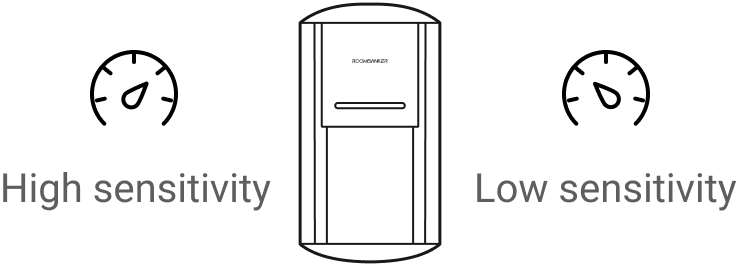
Adjustable sensitivity
Pet-aware detection
Plan for the routes animals use


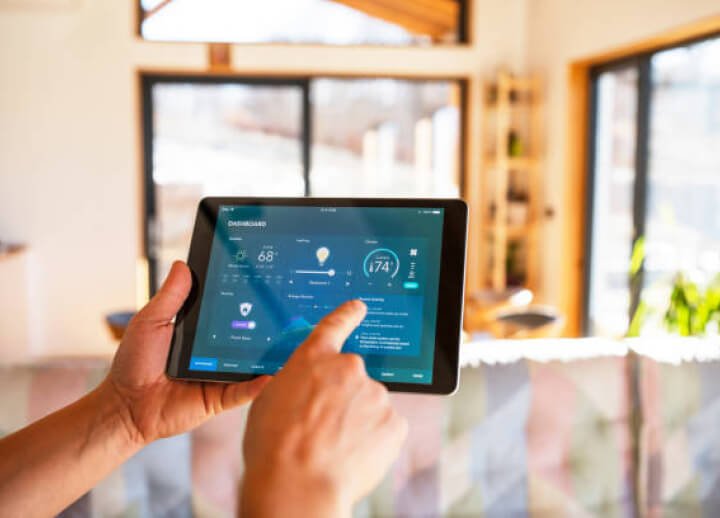
Setup and testing in RB Link
Add devices. Test signal and coverage.

IP54 outdoor enclosure
Match the enclosure to site exposure

Tamper monitoring
Tamper event reporting

DETECTION PERFORMANCE
Detection & coverage


Coverage for the approach you need to protect
Nominal detection coverage is up to 16 m with a 90° angle under the specified installation and test conditions. Match the pattern to the intended crossing paths and verify them on site.
Temperature Compensation
RBSS-PS2 uses temperature compensation to help account for changing operating conditions. Its specified operating range is −10°C to +60°C.
If you install it beside a sunny entrance, follow the sunlight and siting restrictions when choosing the mounting position.


Account for nearby pet activity
Pet-aware detection depends on mounting, sensitivity and the animal’s route. Raised surfaces can change how a pet enters the detection pattern. Test likely animal routes alongside intended crossing paths.
Which indicators help during setup?
The indicator colours and flash patterns show you registration, signal strength and motion detection during setup.
| Task or state | Indicator |
|---|---|
| Registration | Green: 250 ms on / 750 ms off |
| Find Me | Green: 1 s on / 1 s off |
| Strong / medium / weak signal | Green / orange / red: 3 s on / 3 s off |
| Lost signal | Red: 250 ms on / 250 ms off |
| Motion detected | Red flashes every 500 ms |
To add the detector in RB Link, select the Hub, then “+” and “Add peripheral”. Remove the battery insulation strip. If the device does not appear and the green indicator is off, hold the register button for 5 seconds to retry. Assign a room and complete the addition.
For example, if you see the red indicator turn on for 3 seconds and off for 3 seconds during a signal-strength test, the signal is weak. Signal-strength testing switches off automatically after 2 minutes.
INSTALL & COMMISSION
Outdoor installation
Setup and testing, together
Use RB Link to add RBSS-PS2 and assign it to a room. Follow the RBSS-PS2 quick-start guide for the model-specific steps.
1

Open the app to add devices.
2

Power on the device.
3

Assign a room, then test the site.
Designed for installation and servicing

Test and Install
Test signal strength at the proposed position before final fixing. Mount RBSS-PS2 at 1.8–2.2 m using the documented wall plate and screws. Run the installation test across the intended paths.

Access for Servicing
Choose a mounting position that remains accessible for inspection and servicing. Follow the current model instructions for battery replacement.
CONNECTED PROTECTION
Wireless system integration

Wireless connection. A matched system.
RBSS-PS2 uses the RBF protocol for two-way communication with a compatible Roombanker Hub.Supported systems include R2/Pico and R2 PRO. Match the detector’s 868 or 915 variant to the Hub and project market.The published nominal radio range is up to 3,100 m in open space; test the link at its final installation position.
Connect detection to your alarm system
RBSS-PS2 reports motion events to the compatible Hub. The Hub applies the armed state and configured actions for connected devices. Test each required siren and notification path during commissioning.
Available actions depend on the Hub, connected devices and configuration.

ONGOING RELIABILITY
Maintenance & protection
Over-the-air firmware updates
RBSS-PS2 supports over-the-air firmware updates. Follow the update instructions for the installed device and released firmware.

Tamper event reporting
RBSS-PS2 includes tamper protection. Verify tamper event reporting and the configured system response during commissioning.
ONGOING RELIABILITY
Maintenance & protection
Model and System Guides
Need more context? Compare indoor and outdoor selection, understand dual-technology detection, or investigate unwanted alarms. For sites with animals, use the pet-friendly PIR guide.
PROJECT QUESTIONS
RBSS-PS2 Project Questions
What does RBSS-PS2 detect?
RBSS-PS2 detects motion using passive infrared and microwave sensing. Both must detect activity for the detector to trigger an alarm. The Hub then carries out the system response you have set.
For example, if you are testing a warehouse entrance, check motion detection at the detector and the configured response at the Hub as separate steps. The dual-technology guide explains how the two sensing methods work together.
Which Roombanker systems can it work with?
Supported systems include R2/Pico and R2 PRO. Match the exact regional detector and Hub variants for the project.
Where should the detector be mounted?
Use the documented wall-plate mounting method at 1.8–2.2 m. Avoid direct sunlight and sources of significant temperature change. See the outdoor detector quick-start guide for the installation procedure.
How should pet activity be assessed?
Include likely animal routes and access to raised surfaces when choosing the position and sensitivity. Test these conditions alongside the intended detection paths.
What should be tested before handover?
Test radio signal strength and intended detection paths separately. Then verify the system actions required by the project. The sensitivity guide explains the trade-off when adjusting settings.
Where are the model specifications and setup instructions?
Use the RBSS-PS2 specification for model data and the quick-start guide for pairing, indicator patterns and installation tests.
Discuss Your Outdoor Detection Project
Share the site layout, intended crossing paths, nearby movement, mounting conditions, Hub model and market.
Build Your Roombanker Alarm System
You May Also Be Interested In These Solutions

